
Spring Beauty
Claytonia virginica
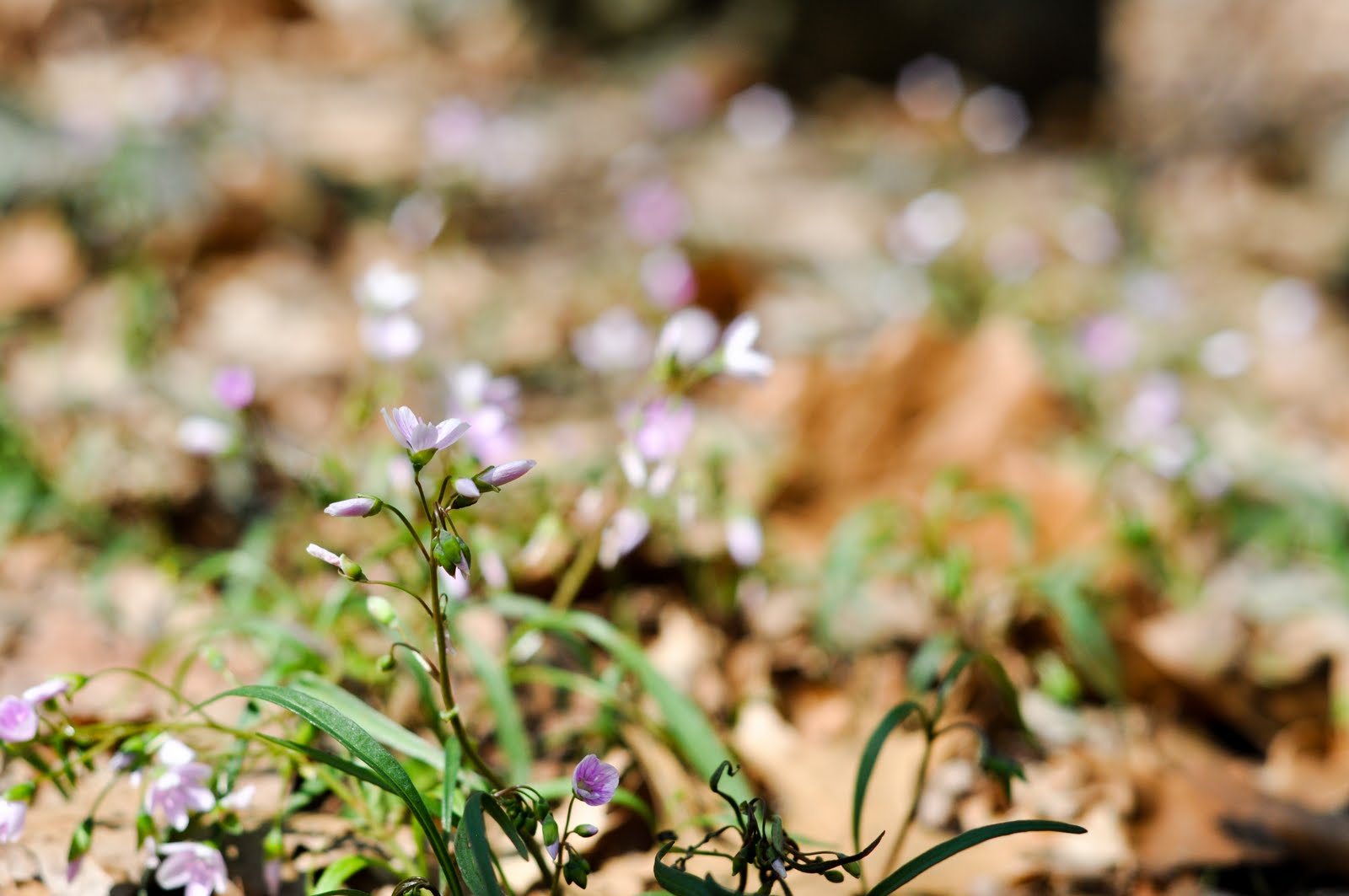
Spring Beauty is in the Purslane family (Portulacaceae.)
It grows from a potato like tuber that was eaten by colonists, indians, and is still eaten by those who enjoy eating edible wild plants.

Bloodroot
Sanguinaria canadensis

Bloodroot leaves long outlast the short lived flowers. The red juice from the underground stem can be used for dyeing and insect repellant. They belong to the poppy family (Papaveraceae)
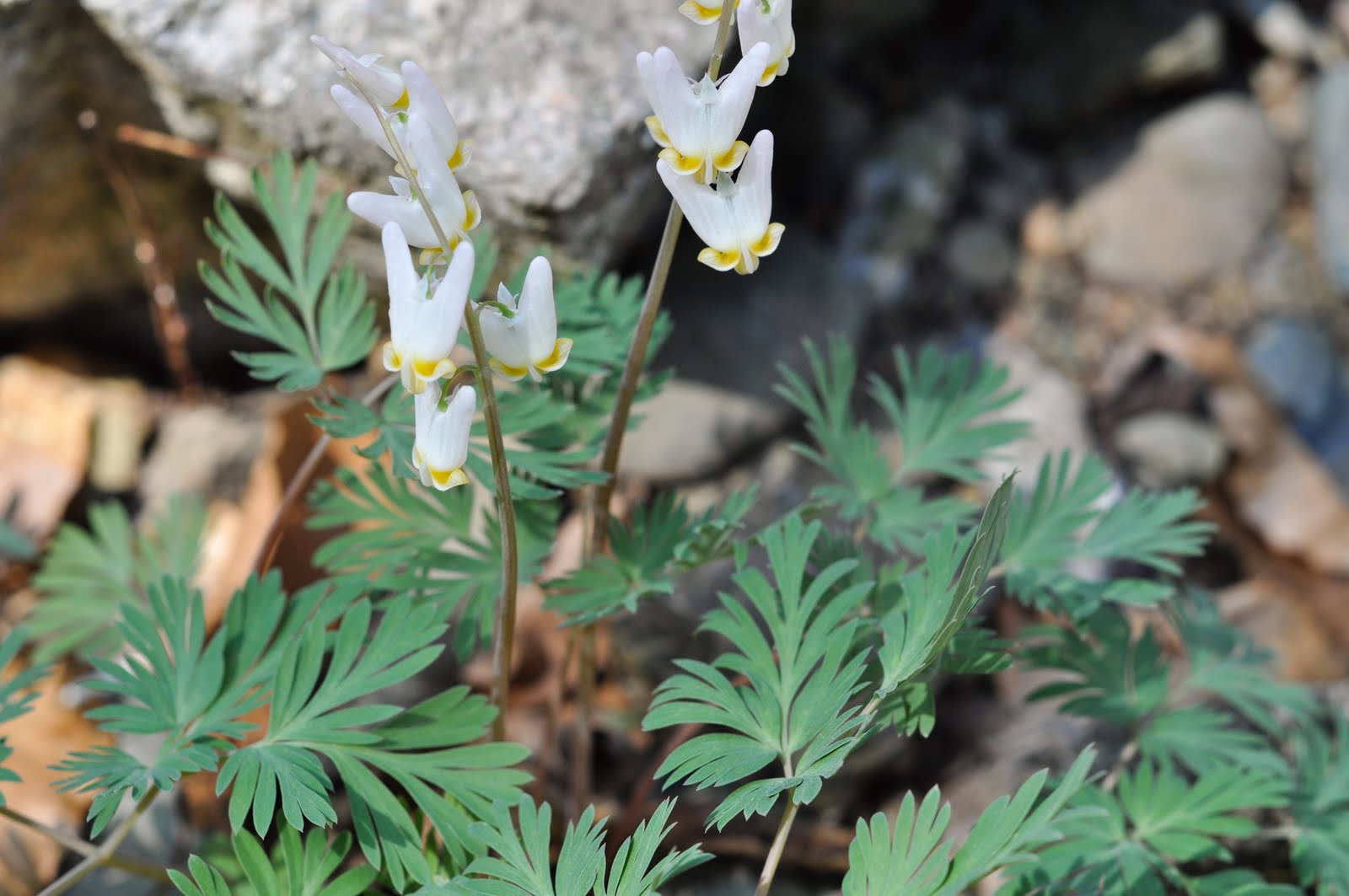
Dutchman’s Breeches
Dicentra cucullaria

An entire wooded slope carpeted in Dutchman’s Breeches, a relative of the showy and more widely known Bleeding Heart.

Yellow Violet
Viola
unsure of the species

Cut leaved Toothwort
Dentaria Laciniata
(In the mustard family, Brassicaceae)
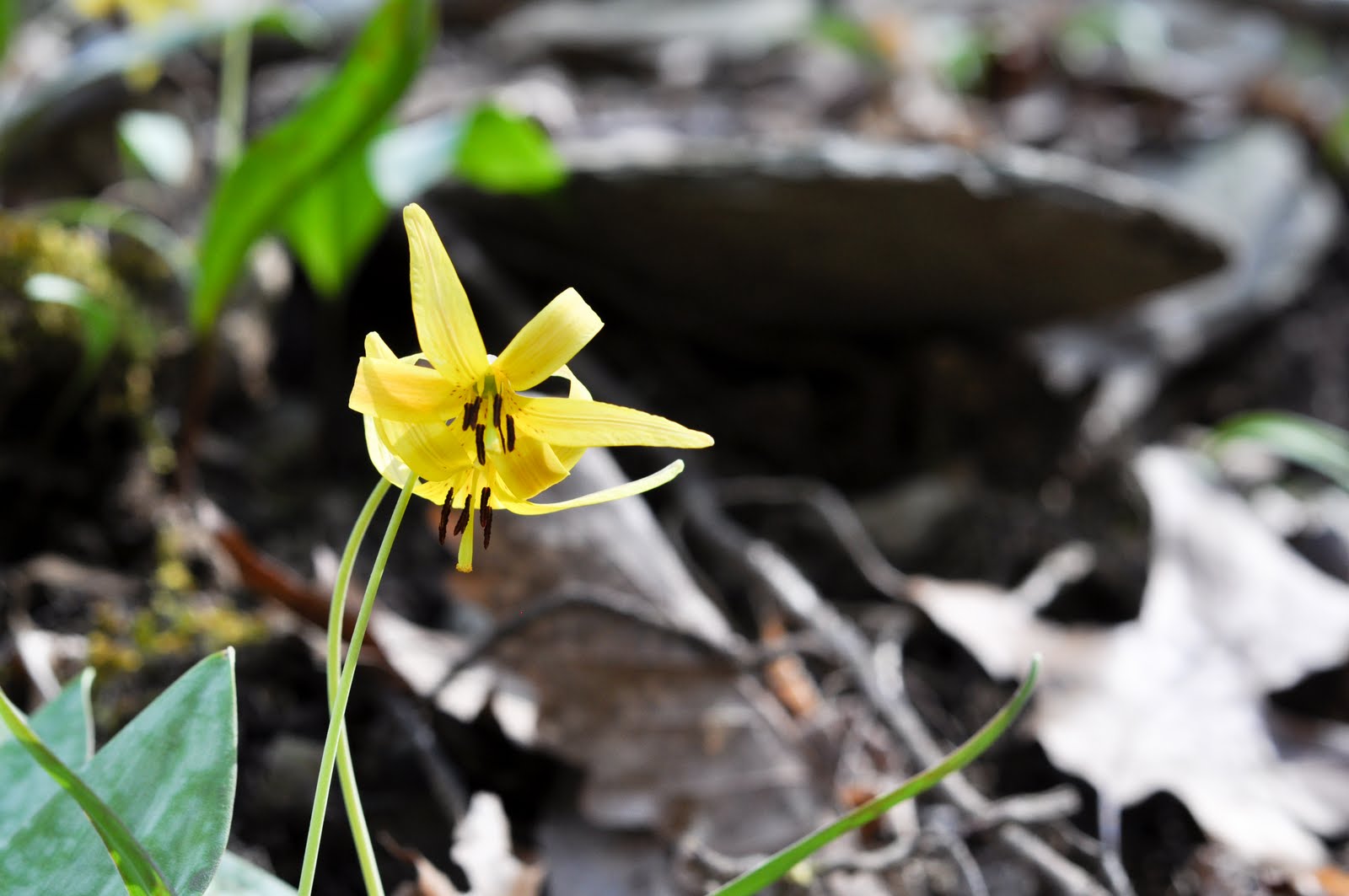
Trout Lily
Erythronium americanum
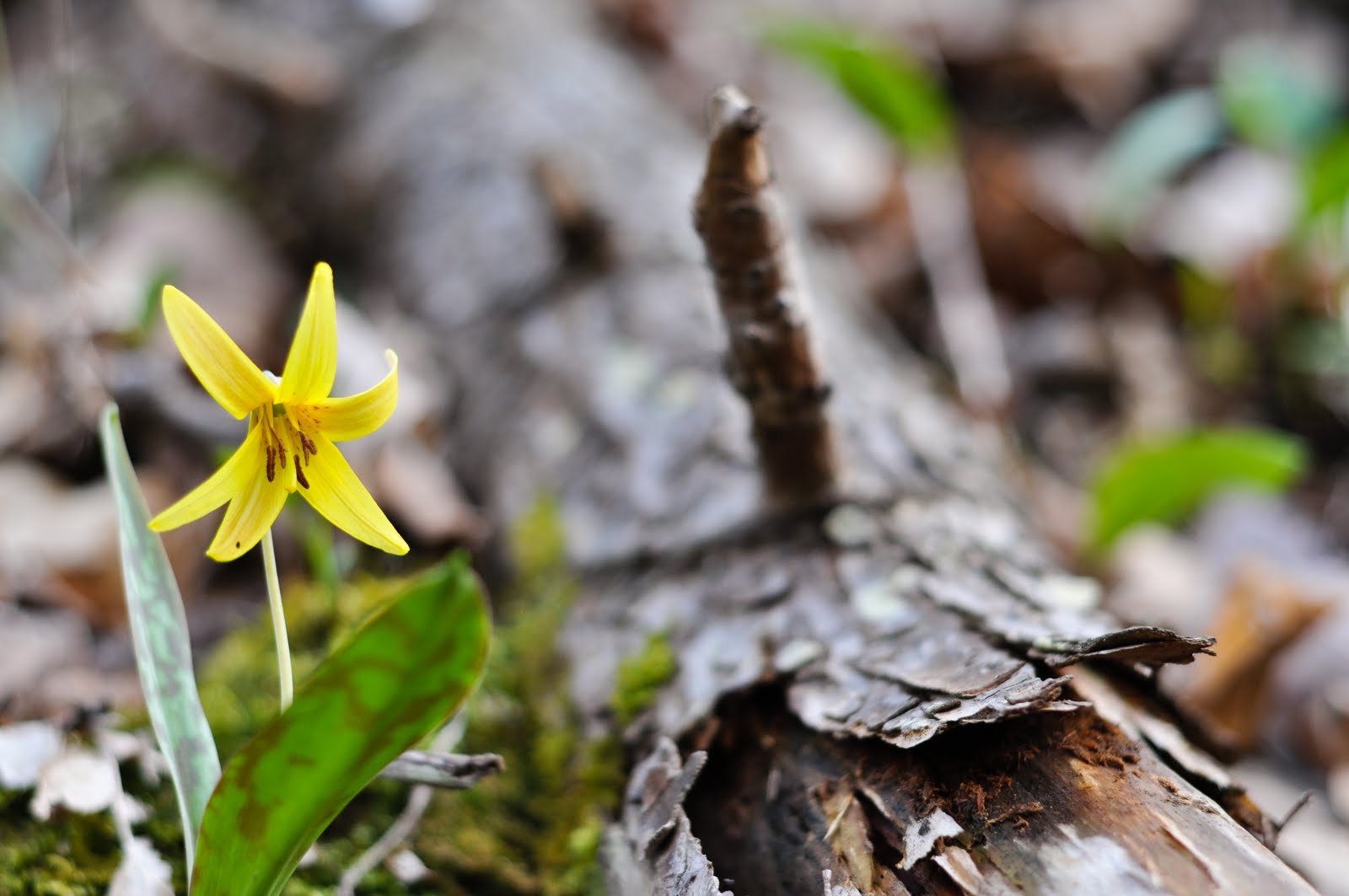
Trout lilies are also known as Dogtooth Violets.

Large Flowered Trillium
Trillium grandiflorum

Round-lobed Hepatica
Hepatica americana

Both the large leaf on the left, and the damaged one on the right are Hepatica leaves. Hepatica belongs to the buttercup family (Ranunculaceae)
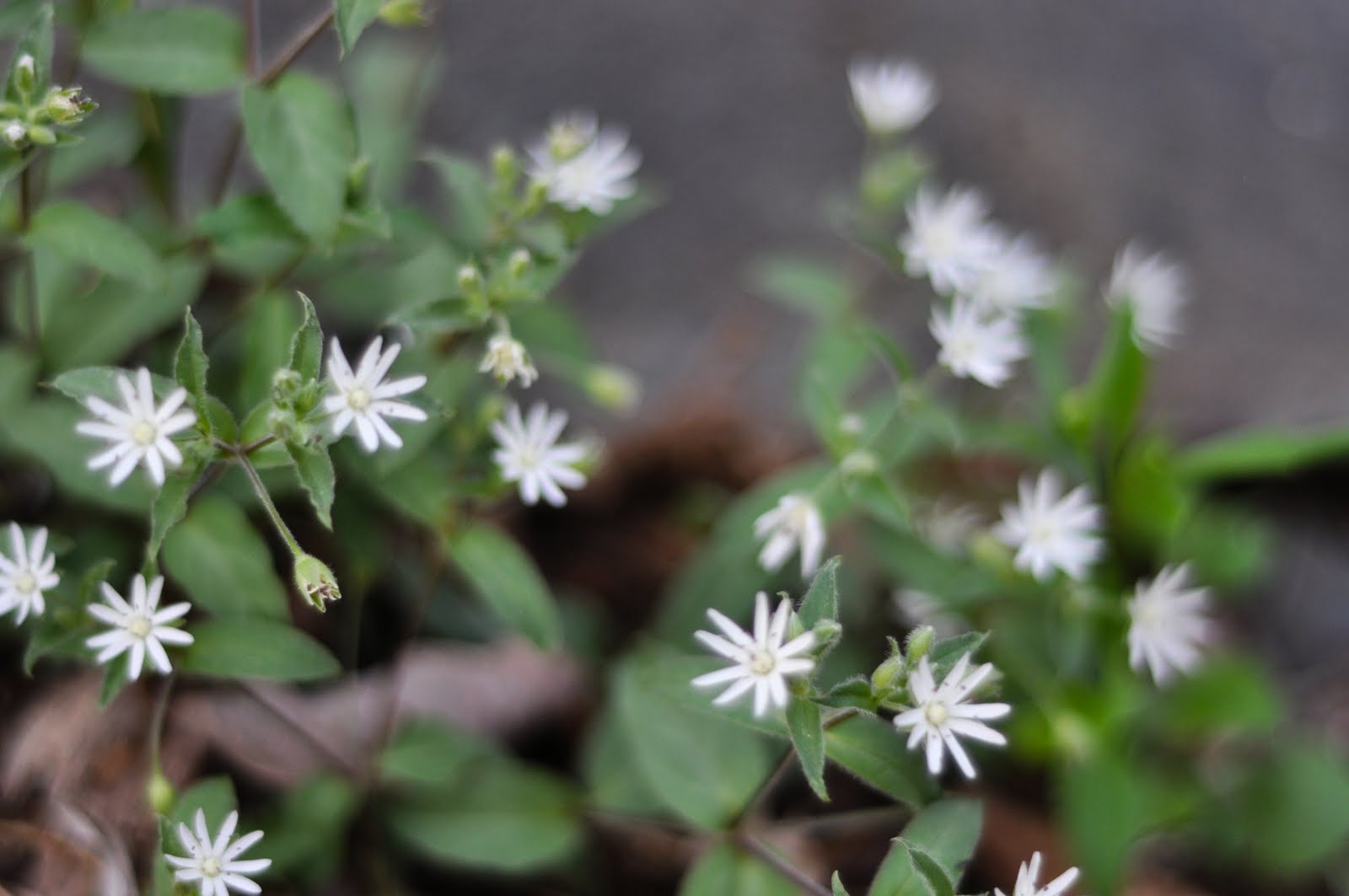
Star Chickweed
Stellaria pubera
*Depending on my time and experiences, this may become a regular feature as I so enjoy studying wild plants and trees. I am sorry to bore you with all my nerdy details, but this is the sort of thing I love to learn and share with my children. I studied trees extensively in college, but wildflower identification has always been an area I would like to pursue. I take an enormous satisfaction from being able to answer my children when they point to a wild plant and ask me “Mommy, what’s that?” I am not able to answer nearly as often as I like, so this will be a focus for me this spring and summer. What a natural way for my children to learn along with me as we explore the outdoors together!

This website was… how do I say it? Relevant!!
Finally I’ve found something which helped me.
Appreciate it!